
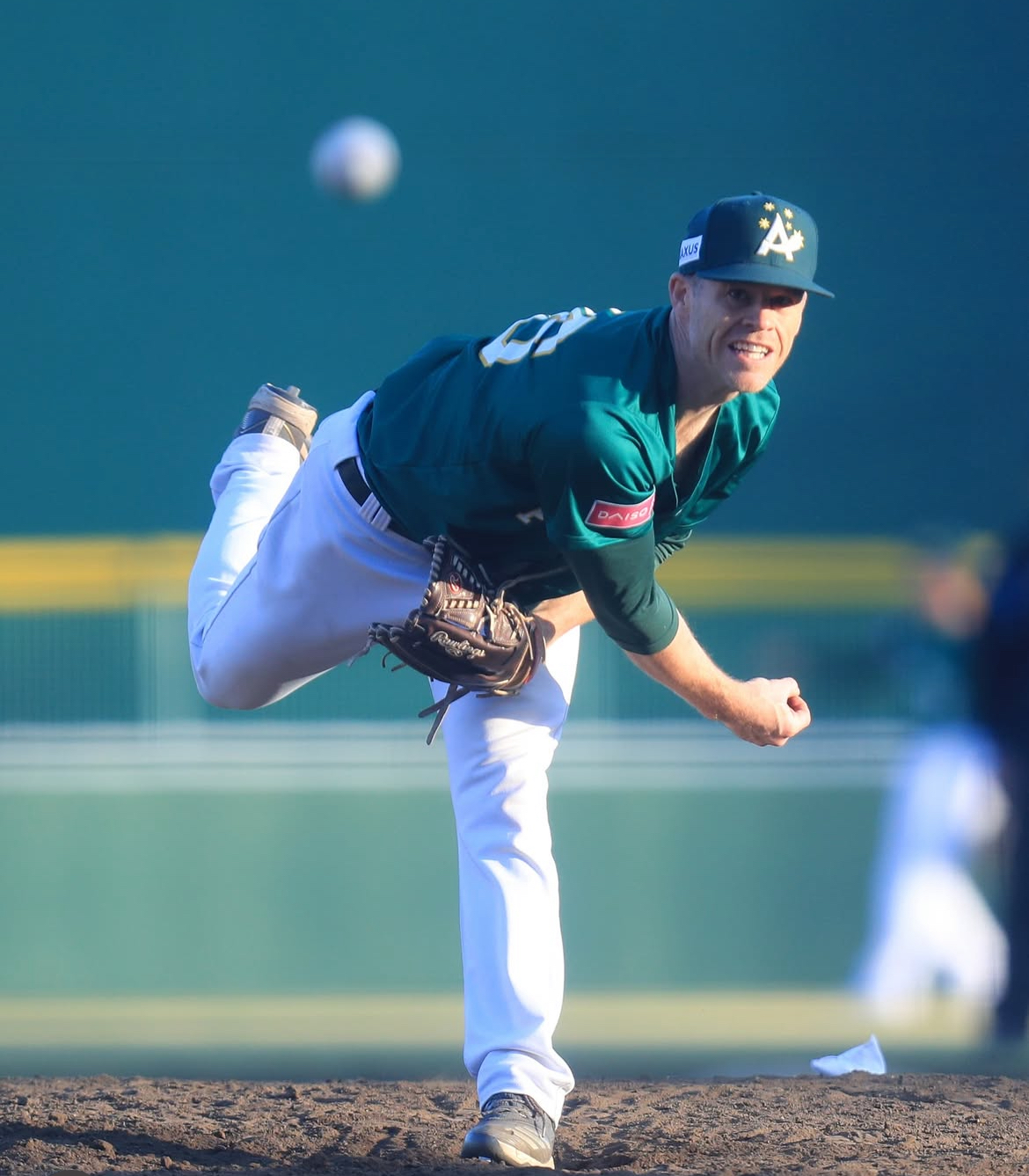
Key Takeaways
– Velocity is a chain, not a switch — mechanics, mobility, strength, and power each depend on the one before it, and skipping a phase breaks the whole sequence.
– Fix your delivery before you load it — adding strength or weighted-ball work on top of broken mechanics just makes the leak (or the injury risk) bigger.
– Mobility sets your ceiling — without thoracic, hip, and shoulder range of motion, added strength has nowhere to go and gets rerouted to your elbow or lower back.
– Train strength that transfers — triple extension, rotational core strength, and posterior chain work matter more for velocity than a bigger squat number alone.
– Power is the conversion step — medicine ball throws, jumps, and weighted implements train your nervous system to fire existing strength faster, which is what a radar gun actually measures.
– Recovery is where adaptation happens — under-sleeping and skipping structured rest doesn’t just stall progress, it’s one of the strongest predictors of arm injury in youth pitchers.
– Expect 3-6 months for a real gain — a reliable 3-5 mph increase takes a full sequenced cycle through all five phases, not a weekend program or a single offseason hack.
Marcus threw a no-hitter his junior year. Six innings, four strikeouts looking, a diving catch behind him in the fifth that saved the whole thing. He hit .340 on the season. And when the college coaches lined up behind the backstop that spring, not one of them asked for his number.
They asked for the number of the kid who walked five batters that same game but touched 88 on the gun twice.
That’s the part nobody tells you when you’re grinding through a season doing everything “right.” Radar guns don’t care about your ERA. They don’t care about your batting average, your coachability, or the fact that you never miss a workout. A scout with a stopwatch and a Pocket Radar can watch you for four pitches and make a decision that changes your life. That’s not fair. It’s also not going anywhere. So the question worth asking isn’t “why does this happen” — you already know why. The question is: what do you actually do about it?
This is the roadmap we use with players at RP Performance. Five phases, in order, that take a player from “solid stats, no offers” to “the guy who added 5 mph and made them look twice.” Mechanics. Mobility. Strength. Power. Recovery. Skip a phase and the whole thing collapses, because velocity isn’t one thing you train — it’s a chain, and a chain only moves as fast as its weakest link.
What Actually Adds 5 MPH to a Throw or a Swing?
Here’s the uncomfortable truth: most players chase velocity backward. They start with weighted balls, or a heavier bat, or a max-effort throwing program they found on YouTube, and they skip the step that makes all of it work — building a body that can actually express force efficiently. Velocity is the output. It’s what happens when four systems stack correctly: how well you move (mechanics), how much range you have to move in (mobility), how much force you can produce (strength), and how fast you can produce that force (power). Recovery isn’t a fifth ingredient sitting off to the side — it’s the multiplier that determines whether the other four actually add up or cancel each other out.
Driveline Baseball and Tread Athletics both built entire training philosophies around this exact sequencing, and for good reason: throwing 5 mph harder isn’t about trying harder. It’s about removing the leaks in the system, one phase at a time, and building in that order. A player with elite strength and terrible mechanics is a Ferrari with a bent axle. A player with clean mechanics and no mobility is a sports car stuck in second gear. You need the whole chain.
The Mechanics Foundation: Fix the Delivery Before You Load It
Every added pound of force you put into a broken movement pattern goes somewhere. It either leaks out uselessly, or it finds the weakest joint in the chain and breaks it. That’s why mechanics come first, always, no exceptions — even before mobility work in a strict sense, because mechanics is what tells you where your mobility gaps actually are.
Good throwing and hitting mechanics share one non-negotiable principle: sequencing. The body has to fire from the ground up — legs, then hips, then torso, then shoulder, then arm, then hand — each segment building speed on top of the one before it, like cracking a whip. This is called the kinetic chain, and it’s the single most researched concept in throwing biomechanics for a reason. When a young pitcher “throws with his arm,” what’s actually happening is his hips and torso fired too early or too late, so the arm has to do work it was never built to do alone. That’s not just a velocity problem. That’s how elbows and shoulders get hurt.
A mechanics assessment — ideally on video, broken down frame by frame — should look at hip-shoulder separation, front-foot landing direction, glove-side control, and arm path. You don’t need a $10,000 biomechanics lab to start. You need someone who understands the kinetic chain watching you move in slow motion, pointing out where the sequence breaks down. Fix that first. Everything downstream depends on it.
Why Does Mobility Have to Come Before Strength?
Here’s a pattern that shows up constantly with overlooked players: they hit the weight room hard, get noticeably stronger, and their velocity barely moves — sometimes it even goes down. That’s not a strength problem. That’s a mobility ceiling.
Strength is your ability to produce force. Mobility is how much range of motion you have to produce that force through. If your thoracic spine can’t rotate, your hips can’t internally rotate, or your shoulder can’t externally rotate into “lay-back” position, then adding strength just means you’re producing more force through a shorter, more restricted range — which your body will compensate for by finding force somewhere else, usually the elbow or the lower back. Mobility isn’t stretching for the sake of stretching. It’s expanding the track your power gets to run on.
The priority areas for a thrower or hitter are almost always the same three: thoracic spine rotation, hip internal/external rotation, and shoulder external rotation. A simple test — can you rotate your upper back while keeping your hips still, can you sit in a deep internal-rotation hip position without pain, can you get your throwing arm into a full lay-back position without shoulder pinching — tells you more about your velocity ceiling than a single 60-yard dash time ever will. Build the range first. Strength has nowhere to go without it.
What Kind of Strength Actually Transfers to the Mound?
This is where most gym programs quietly fail baseball players — not because the lifting is wrong, but because it’s disconnected from the sport. Getting stronger in a vacuum and getting stronger in ways that transfer to throwing velocity or bat speed are related, but they’re not the same project. Here’s an example of the type of lifts you need to do
Rotational athletes need strength in three specific patterns: triple extension (the hips, knees, and ankles driving in one explosive line — the same pattern used in a vertical jump), rotational core strength (the ability to resist and then create rotation through the trunk, not just “abs”), and posterior chain strength (glutes and hamstrings, which do far more of the work in a throw or swing than most players realize). A player who can squat 300 pounds but can’t stabilize a single-leg landing or resist rotation through a cable chop hasn’t built strength that transfers — they’ve built strength that looks good on paper.
This is also where the frustration compounds for overlooked players, because strength gains take months, not weeks, and the payoff isn’t linear. You don’t get 1 mph for every 10 pounds added to your squat. You get nothing for a long stretch, and then — once mechanics, mobility, and strength are all far enough along — you get a jump. That’s not bad luck. That’s how adaptation works. The players who quit in month two never see the month-five jump.
The Power Phase: Turning Strength Into Speed
Strength is potential energy. Power is what happens when you convert that potential into speed — and speed, specifically the speed of force production, is what a radar gun actually measures. This is the phase most overlooked players skip straight to, and it’s exactly why skipping the first three phases backfires: power training loads an already-fast movement even faster. If the movement underneath it is broken or restricted, you’re just loading the leak.
Done in the right order, power training looks like medicine ball throws, jump variations, and weighted implement work (weighted balls for throwers, overload/underload bats for hitters) — all designed to train the nervous system to fire strength on a shorter clock. This is the phase where the “5 mph” conversation actually starts to show up on the gun, because you’re training the exact quality — rate of force development — that separates a hard thrower from a strong one. Plenty of strong high schoolers throw 78. The ones who throw 88 aren’t necessarily stronger. They’re faster at applying the strength they have.
Why Does Recovery Determine Whether Your Training Actually Works?
Ask any overlooked, frustrated 16-year-old what’s holding back their velocity and you’ll get answers about mechanics, weight room numbers, throwing programs. You will almost never hear “I’m not sleeping enough” or “I’m throwing four days a week with zero structured rest.” But the research on this is not subtle: sleep under seven hours is one of the strongest predictors of arm injury in youth pitchers, and it directly suppresses the same nervous system output that the power phase is trying to train.
Recovery isn’t the reward you get after training. It’s the phase where the adaptation actually happens. Every hard lift, every weighted-ball session, every bullpen creates a stimulus — a controlled disruption the body needs to respond to. If recovery is missing (poor sleep, no structured throwing shutdown periods, ignoring soreness that’s actually early tendon irritation), the stimulus never converts into adaptation. It just accumulates as fatigue, and fatigue is the single fastest way to stall a velocity program or end a season early with an injury that keeps the scouts away for an entirely different reason.
How Long Does It Take to Add 5 MPH?
This is the question every frustrated player actually wants answered, and the honest answer disappoints people who want a shortcut: a realistic, well-sequenced program takes somewhere between three and six months to produce a reliable 3-5 mph gain, and closer to a full year for a bigger jump. That timeline isn’t a sales pitch designed to keep you subscribed to a program. It’s how long it physically takes to move through all five phases without skipping the parts that don’t feel exciting.
Mechanics changes can show up in weeks — a cleaner sequence sometimes adds a tick or two almost immediately, because you’re no longer leaking force into a bad pattern. Mobility gains take four to eight weeks of consistent work before a joint reliably holds new range under load. Strength adaptations take eight to twelve weeks minimum before they’re usable, not just measurable on a bar. Power training needs that strength base underneath it before it has anything to convert. And recovery isn’t a phase you finish — it’s the condition every other phase depends on the entire time.
Players who add real velocity and keep it aren’t the ones who found a secret. They’re the ones who trusted the sequence long enough for the phases to stack. The kid who touched 88 twice in one outing didn’t do it in a weekend, and neither will you — but the gun doesn’t ask how long it took. It just reads the number.
Putting the Roadmap Together
None of these five phases works in isolation, and none of them works out of order. Mechanics tells you where the leaks are. Mobility gives strength somewhere to go. Strength gives power something to convert. Power turns that strength into the speed a radar gun reads. Recovery is what makes sure the whole cycle actually compounds instead of resetting every week.
If you’re the player who’s been overlooked — good stats, no offers, no invites, watching teammates with less consistency get more attention because of one loud tool — this is the answer to the frustration, not a way around it. You don’t out-stat your way into a velocity conversation. You out-build it. Five phases, in order, tracked over months, not weeks. That’s the roadmap. The gun doesn’t lie, and it doesn’t care about your batting average — but it will absolutely reward the work most players are too impatient to do in the right sequence.
Frequently Asked Questions
How long does it take to add 5 mph to a throw?
Most players see a reliable 3-5 mph gain over three to six months when they train mechanics, mobility, strength, power, and recovery in sequence. Mechanics fixes can show up within weeks, but strength and power adaptations need eight to twelve weeks of consistent work before they’re usable in a game.
What is the correct order to train for pitching velocity?
At RP Performance, we sequence it mechanics first, then mobility, then strength, then power, with recovery supporting all four phases the entire time. Training strength or power before fixing mechanics and mobility routes force through compensations, which caps velocity gains and raises injury risk.
Why isn’t getting stronger in the weight room increasing my velocity?
This usually means a mobility restriction, not a strength problem. If your thoracic spine, hips, or shoulder can’t rotate through a full range, added strength gets rerouted into a shorter, more restricted movement pattern instead of adding speed to your throw.
What’s the difference between strength training and power training for throwers?
Strength training builds your capacity to produce force — think squats, rotational core work, and posterior chain exercises. Power training (medicine ball throws, jumps, weighted balls) teaches your nervous system to express that force faster, which is the specific quality a radar gun measures.
Does sleep actually affect throwing velocity?
Yes. Sleeping under seven hours is one of the strongest predictors of arm injury in youth pitchers, and poor sleep directly suppresses the nervous system output that power training depends on. Recovery is the phase where the adaptation from training actually happens.
Can this roadmap also help with bat speed, exit velocity, or sprint speed, not just pitching velocity?
Yes. The same sequence — mechanics, mobility, strength, power, recovery — applies to any rotational or sprint-based output, including bat speed, exit velocity, and baserunning speed, because all three depend on the same kinetic chain and force-production system. This is the same framework RP Performance uses across hitting, throwing, and speed training.
Do I need a weighted-ball program to add velocity?
Weighted balls belong in the power phase, not the starting point. They’re most effective after mechanics are cleaned up and a mobility and strength base is in place — using them earlier just loads a broken or restricted movement pattern faster.

 using WordPress and
Comments are closed